
Why Do You Need a Migraine Diary?
A migraine diary helps you describe headache patterns, review medication use and make doctor visits more useful. Learn what it can show and what it cannot prove.
Cephala · Educational guides
Published: · Updated:
A migraine diary helps you describe what happened instead of trying to remember a difficult month during a short appointment. It can show when symptoms occurred, how they affected your day and which treatments you used. It is useful for discussing patterns with your doctor, but it cannot diagnose migraine or prove a trigger on its own.
You need a record you can keep, not a perfect journal. Paper, a calendar or an app can all work.
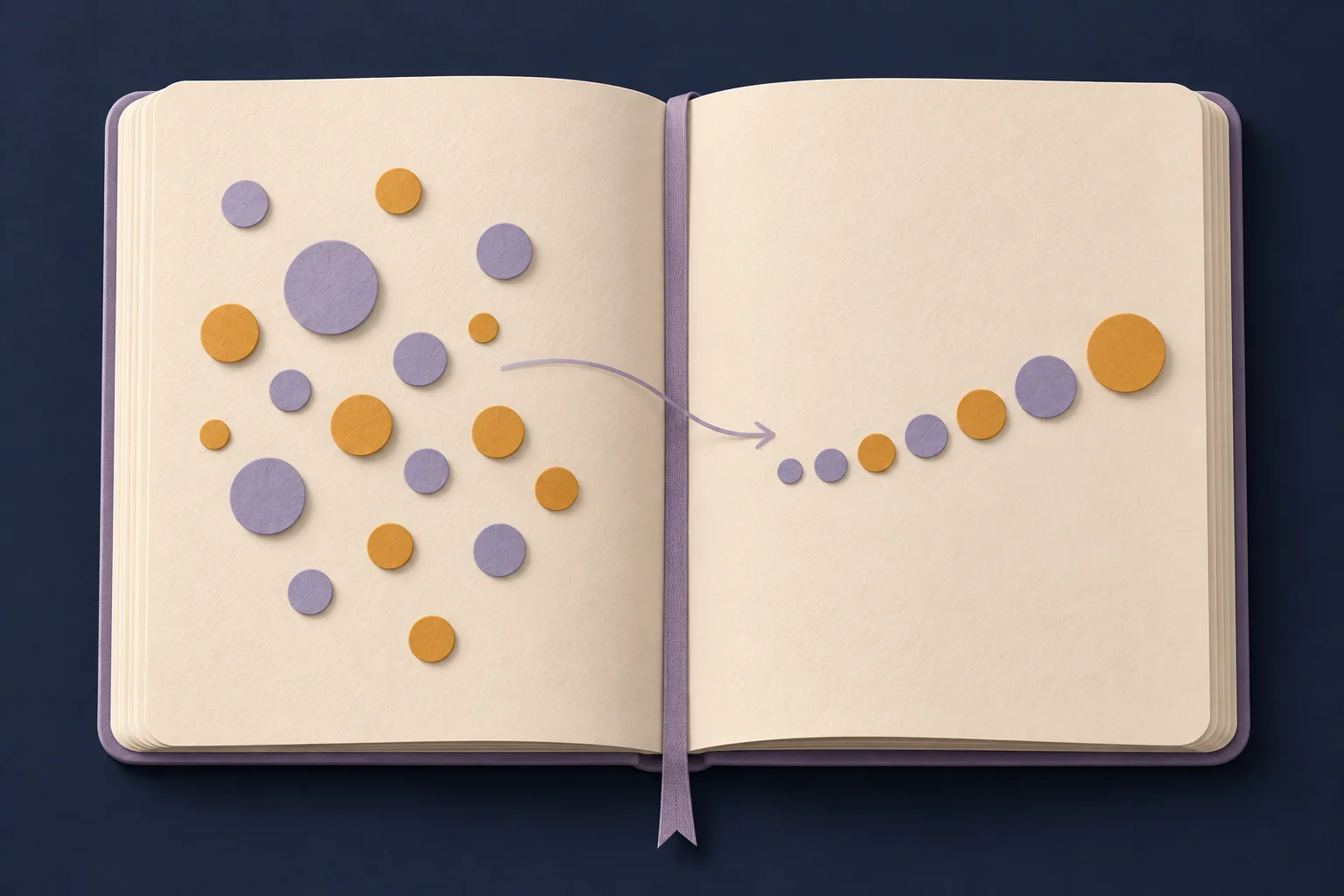
Memory does not give you the full monthly picture
After a difficult month, the worst attack may be easy to remember. Milder headaches, medication taken early or days when you felt well can be less clear. A dated record helps separate those experiences.
That matters because “I had a bad month” does not answer how many days involved headache. It also does not explain whether you had several short attacks or one episode lasting across several dates.
The ICHD-3 chronic migraine guidance describes a diary of at least one month as generally useful for characterizing frequent headaches. A month of records supports assessment. It is not a reason to delay care until every day is filled in.
A diary gives your appointment a starting point
Your doctor can use the record to ask more specific questions about symptoms, treatment response and changes over time. Notes about missed work or needing to lie down can show impact that a pain score alone misses.
Bring a short summary and keep the detailed entries available. If there are gaps, say so. A blank day should not automatically become a headache-free day in your monthly total.
Our doctor appointment guide explains how to prepare that summary.
It helps you review medication use
When you use several medicines, it can be hard to remember how often each one was taken. Recording names and dates lets you review acute medication days with your clinician.
The ICHD-3 medication-overuse headache criteria consider the drug class, monthly use and the pattern over time. A diary can provide those observations. It cannot decide that a dose is safe or tell you to stop treatment.
Read the medication day guide before interpreting a monthly counter.
It can help you compare treatment periods
If your clinician changes your care plan, the diary gives you something to compare with the earlier period. Are you losing fewer days to headache? Is acute treatment helping as expected? Have you noticed side effects?
Track the questions that matter to your plan. You do not need to calculate a new score every day. Your clinician can explain which changes to watch for and when a review is needed.
It lets you explore possible triggers more carefully
The NHS migraine guide recommends a diary to help identify possible triggers. The word “possible” matters. A food, weather change or stressful event before an attack does not prove a cause.
Record days without attacks too if you are comparing a suspected factor. This helps you notice whether the same factor often occurs without a headache. Our trigger guide explains how to avoid unnecessary restrictions.
How can you keep the habit manageable?
Start with the date, pain severity and medication. Add symptoms or daily impact when you can. Save optional details for later if the screen feels uncomfortable.
Cephala offers short pain and medication entries on iPhone. A paper diary may be better if writing feels easier or you prefer fewer notifications. The useful choice is the one you can keep using.
Common questions
Is a diary necessary if I already know I have migraine?
It can still help describe frequency, medication use and treatment response. Ask your clinician which details are useful for your care.
Can keeping a diary prevent migraine?
A diary is not a preventive treatment. It provides information that can support care decisions. Recording every detail does not guarantee fewer attacks.
What if keeping records makes me anxious?
Simplify the fields and choose a planned review time. Talk to your clinician if monitoring starts to feel overwhelming.
For a short template, see what a migraine diary should include.
Sources
This article is provided for educational purposes only and does not constitute medical advice or clinical diagnosis. Always consult your neurologist or primary physician before starting, stopping or altering headache medications.
Keep a simple migraine record
Record pain and medication in a few taps, keep your entries on your iPhone and share a summary with your doctor.