
What Should a Migraine Diary Include? A Simple Checklist
Learn what a migraine diary should include, with a symptom and medication checklist, a short entry example and tips for recording headache-free or missing days.
Cephala · Educational guides
Published: · Updated:
A migraine diary should include symptom dates, pain severity, medication names and timing, plus how the headache affected your day. Add duration, aura details and treatment response when you can. Record headache-free days separately from missing entries. These details describe your pattern without turning the diary into a long questionnaire. It does not need to be a long journal. A few consistent details usually give you and your doctor more to work with than a detailed entry you can only manage once a month.
If you are starting today, write down the date, your pain level and any medication you took. You can add more once you feel better.
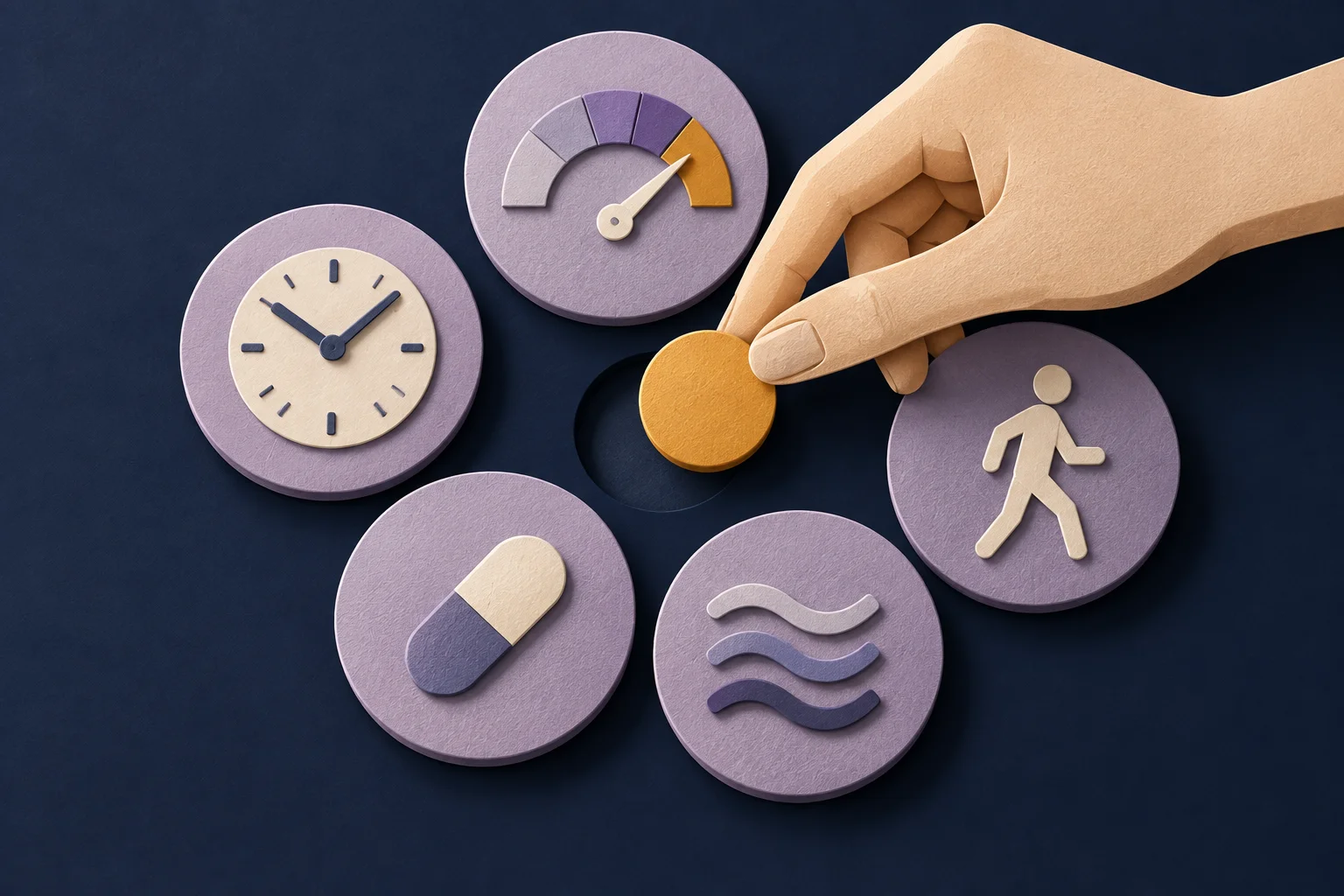
What should you put in a migraine diary?
Start with information you can record even on a difficult day:
- The date and approximate time symptoms began
- Pain severity using the same scale each time
- Symptoms such as nausea or sensitivity to light
- The name of any acute medication and the time you took it
- How the attack affected ordinary tasks
Your doctor may also ask about duration, aura or response to treatment. Record those details when you can. Do not leave out an entry because you cannot remember the exact time.
The NHS migraine guide recommends keeping a diary to help identify possible triggers. A diary also gives you a record to discuss at an appointment. It cannot tell you by itself whether a headache is migraine.
Which details can you add later?
Keep the first entry short if you are in pain. Later, add where the pain was, whether symptoms continued into another date and what happened after treatment. Use approximate timing when necessary. Do not let an optional field stop you recording the essentials.
| Detail | Why it helps |
|---|---|
| Date and symptom timing | Places the episode in your monthly record |
| Pain and other symptoms | Describes the experience beyond an attack label |
| Medication name, dose and time | Shows how treatment was used |
| Response and side effects | Gives your clinician questions to review |
| Daily impact | Describes missed work or other limitations |
| Headache-free and missing days | Keeps the monthly summary honest |
Ask your doctor if additional fields are needed. Preventive medicines should follow their prescribed schedule and be recorded separately from acute medication days. See our medication overview for the distinction.
A short migraine diary example
Here is an example, not a treatment recommendation:
September 30, around 2 pm. Pain 6 out of 10. Nausea and light sensitivity. Took my prescribed acute medicine at 2:20 pm. Stopped working for the afternoon. Felt better by the evening.
The entry separates what happened from what you suspect caused it. If you skipped lunch, add that as a note rather than writing that it definitely caused the attack.
How often should you record symptoms?
Make an entry when symptoms occur and check your record briefly at the end of the day. If your doctor asks for daily tracking, include headache-free days too. A blank day is ambiguous: it might mean no headache or it might mean you forgot to log.
For frequent headaches, a month of daily records can help describe the pattern. The ICHD-3 chronic migraine guidance notes that a diary for at least one month is generally needed to characterize frequent headaches. You do not need to wait a month to ask for care.
What if you miss a day?
Add what you remember and mark uncertain details as approximate. Avoid filling gaps with guesses. If you remember taking medication but not the dose, write that plainly and check the packaging or your prescription if available.
A useful habit is to link your entry to something you already do, such as brushing your teeth in the evening. Keep the record somewhere easy to reach. Paper is fine. An app is useful if it reduces the effort.
Keep screen time short during an attack
Record the essentials first. Save optional notes for later if looking at the screen feels uncomfortable. In Cephala, Quick Log lets you select pain severity and a pinned medication, then return to the entry later. The dim control is available when you want less glare.
Tracking should support your day rather than take it over. Review the diary at a planned time instead of checking it every hour.
For the reasons behind these fields, read why you need a migraine diary. To choose a recording tool, see our 2026 migraine tracker guide.
Common questions
Do I need to track every possible trigger?
No. Start with one or two things you and your doctor want to explore. A long checklist can make the habit harder to keep. Read our guide to tracking possible migraine triggers before changing routines.
Can a diary diagnose migraine?
No. It describes symptoms and patterns. A clinician considers that record alongside your history and an examination.
Should I count entries or headache days?
Keep those separate. More than one entry on a date may still represent one headache day. Our guide to headache days and migraine attacks explains the difference.
Sources
This article is provided for educational purposes only and does not constitute medical advice or clinical diagnosis. Always consult your neurologist or primary physician before starting, stopping or altering headache medications.
Keep a simple migraine record
Record pain and medication in a few taps, keep your entries on your iPhone and share a summary with your doctor.